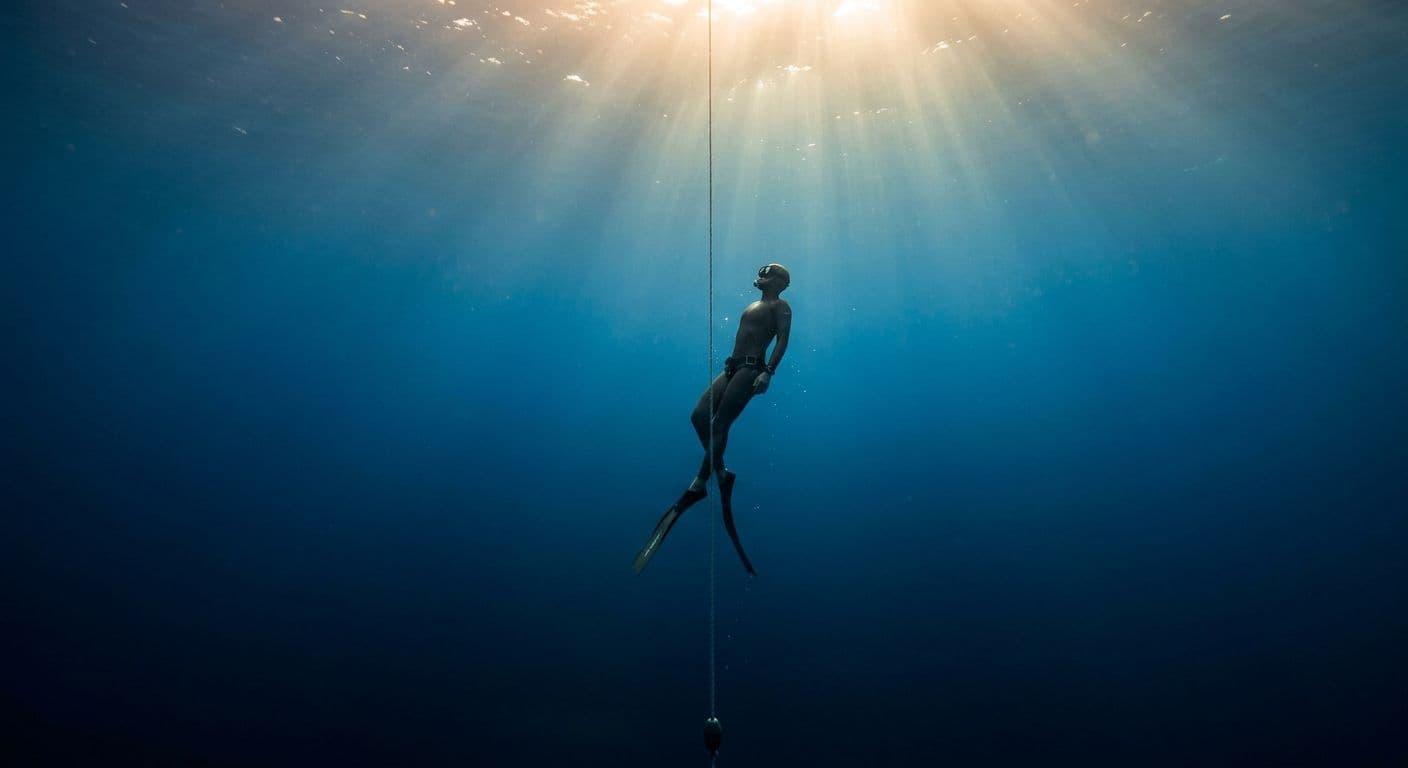
When you start exploring freediving, you quickly run into a handful of training organizations whose names appear on course flyers and competition posters. One of the most established is AIDA. Understanding what it is helps you make sense of the certification cards, the rankings, and the rules that shape the sport worldwide.
A body for both teaching and competing
AIDA grew out of the freediving community in the 1990s and has long worn two hats. On one side it is an education provider that publishes course standards and trains the instructors who teach them. On the other side it acts as a competition authority that defines disciplines, sanctions events, certifies judges, and verifies records. That dual role is why the same four letters show up whether you are taking a first pool class or watching an athlete attempt a deep dive on a buoy.
What a recognized standard gives you
A shared standard means a card earned in one country tends to be understood in another. The benefits show up in a few practical ways:
- Consistent skills: every graduate of a given level has covered the same core safety and technique material.
- Portable credentials: dive centers can quickly see what you have trained for before letting you join a session.
- Fair competition: judges apply the same protocol everywhere, so performances can be compared and ranked.
The certification ladder at a glance
Recreational training is organized as a progression of numbered levels, moving from a gentle introduction toward deeper, more autonomous diving. Beyond those sit instructor and judge pathways for people who want to teach or officiate. Later lessons in this series walk through each rung so you know roughly what to expect before you sign up.
A living standard
Course names, depths, and prerequisites are updated over time. Treat anything you read online as a general guide and confirm current requirements with a certified instructor before booking.
A card is not a license to push limits
Certification confirms you completed training, not that you can safely dive alone or beyond your level. Keep diving with a trained buddy and within the conditions you were taught.
Think of AIDA as one of the maps for the sport: it describes a route from your first relaxed breath-hold all the way to competitive diving and teaching. In the lessons ahead we will follow that route step by step.