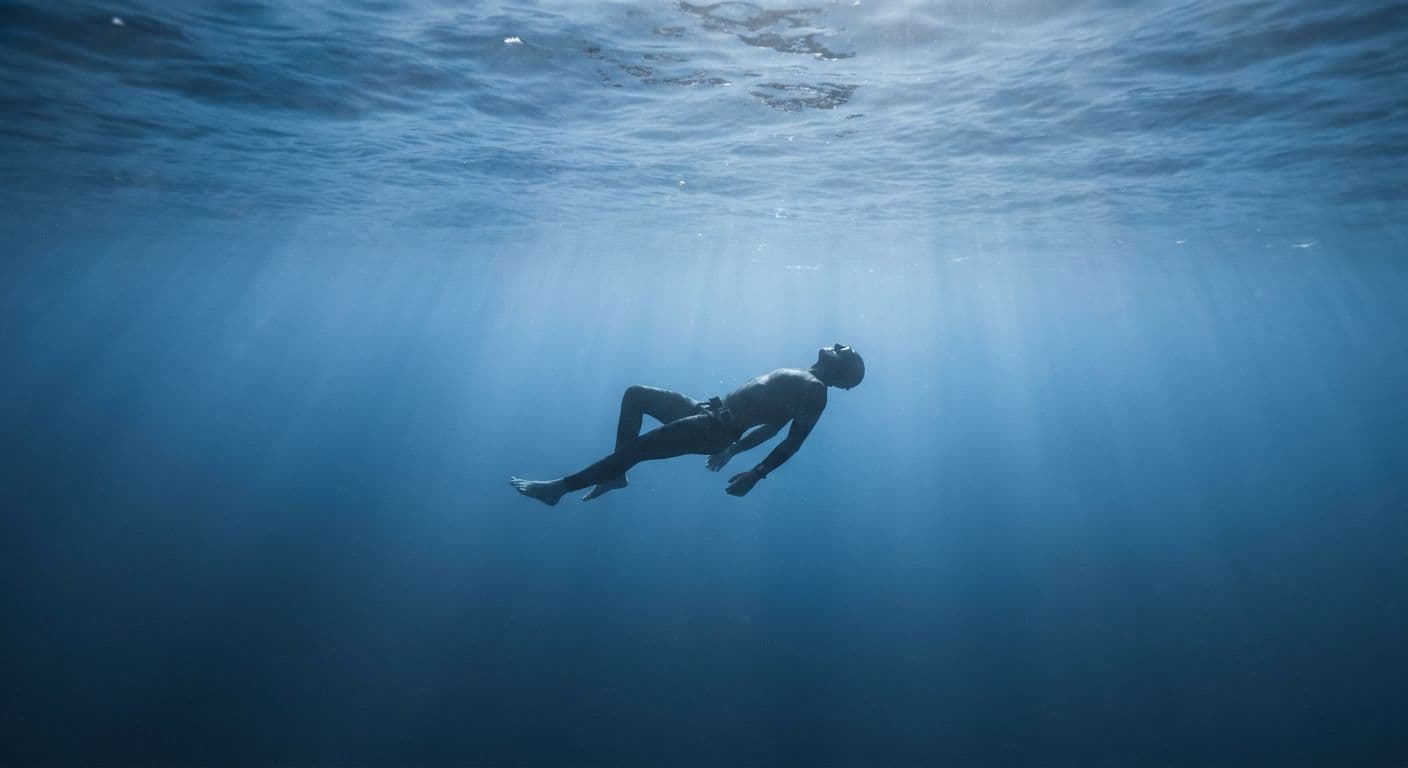
One of the most fascinating parts of freediving is that your body already knows what to do underwater. We share a set of automatic adaptations with whales, seals, and dolphins, often called the mammalian dive reflex. It quietly prepares you to conserve oxygen the moment your face meets the water.
What Actually Happens
When you hold your breath and submerge your face in cool water, several changes begin without any effort on your part:
- Your heart rate slows down, reducing how much oxygen your body burns.
- Blood vessels in your arms and legs narrow, steering blood toward your heart, lungs, and brain.
- As you go deeper, blood plasma helps protect the chest from the squeeze of pressure.
What Triggers It
The strongest triggers are cool water on the face, especially around the forehead and eyes, and the act of holding your breath. This is why a simple face-in-water hold can feel calmer than holding your breath in open air. Some divers gently splash their face with cool water before training to invite the response.
Working With Your Reflex
The reflex grows more noticeable as you relax. Tension and anxiety blunt it, while slow breathing and a settled mind let it bloom. You cannot force these changes, but you can create the conditions for them by staying calm and giving yourself a moment to settle before each hold.
A shared inheritance
This response is present from birth, which is why even babies show calming reactions to water on the face. Freediving simply works with biology you already have.
Adaptation is not invincibility
The dive reflex helps your body cope, but it does not remove the risk of blackout. Always train within gentle limits and never alone in the water.
Understanding this reflex turns freediving from a battle into a partnership with your own body. The more you relax, the more it gives back.