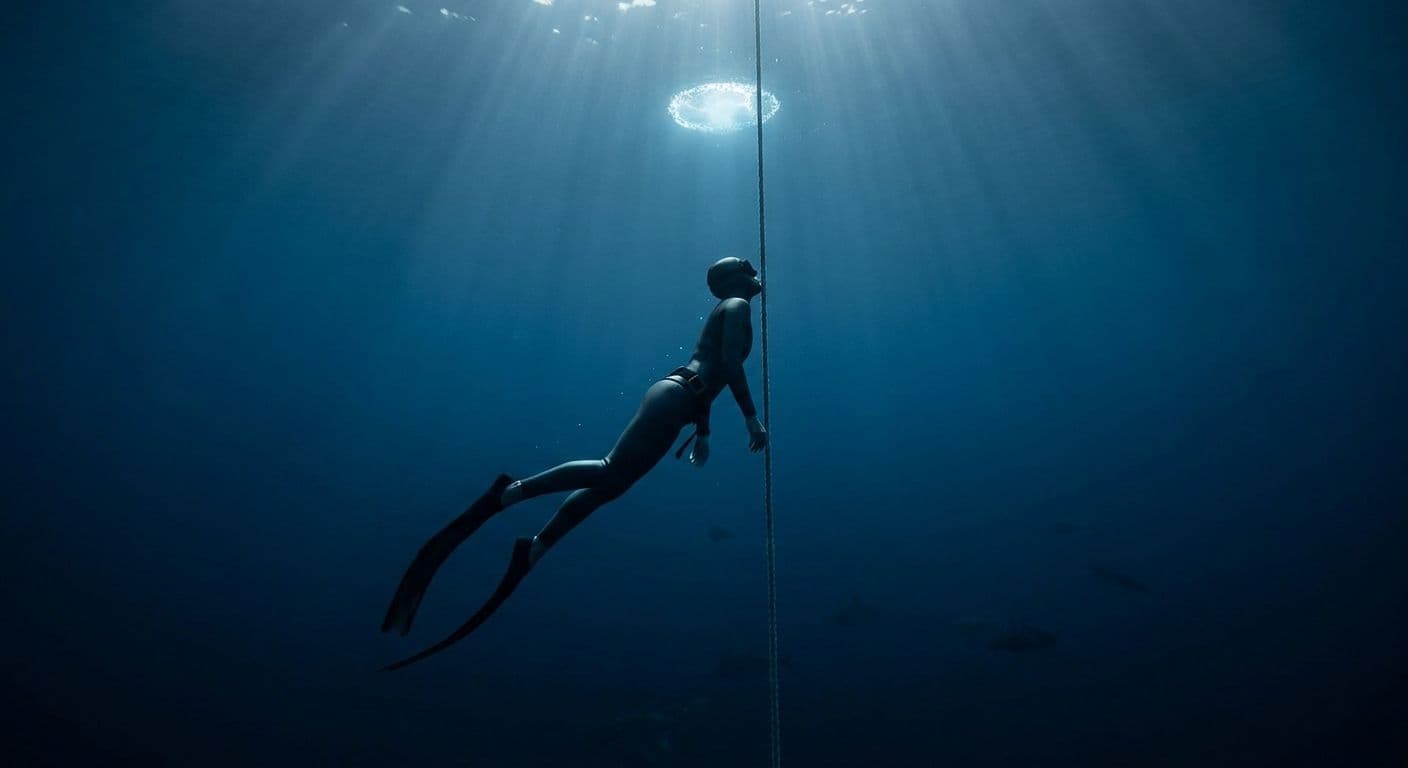
Freediving is not a single activity but a family of disciplines, each with its own focus and feel. Knowing the main types helps you understand what you might enjoy and how training is structured. Broadly, they divide into pool disciplines and depth disciplines.
Pool Disciplines
Pool training happens in shallow, controlled water and is where most people begin.
- Static apnea is holding your breath while floating still, face down. It trains comfort and relaxation.
- Dynamic apnea is swimming horizontally underwater for distance, with or without fins.
Depth Disciplines
Depth disciplines take place in open water along a vertical guide rope. They vary by how you move:
- Constant weight uses fins or a monofin to swim down and back up.
- Free immersion lets you pull yourself along the rope by hand, with no fins.
- More advanced depth disciplines use sleds or specialized techniques and are well beyond beginner territory.
Where Beginners Start
Most courses begin with static and dynamic work in a pool, then introduce gentle depth in calm, supervised conditions. This order builds comfort, technique, and confidence before pressure becomes a major factor.
You do not have to go deep
Plenty of freedivers stay happily in pools or shallow water for years. Depth is one path, not the only goal.
Depth demands supervision
Every depth dive should happen with a trained buddy and proper safety procedures. Never attempt depth training alone or beyond your certification level.
Whatever discipline draws you in, the foundations of breathing, relaxation, and safety stay the same. Choose what brings you joy and build from there.