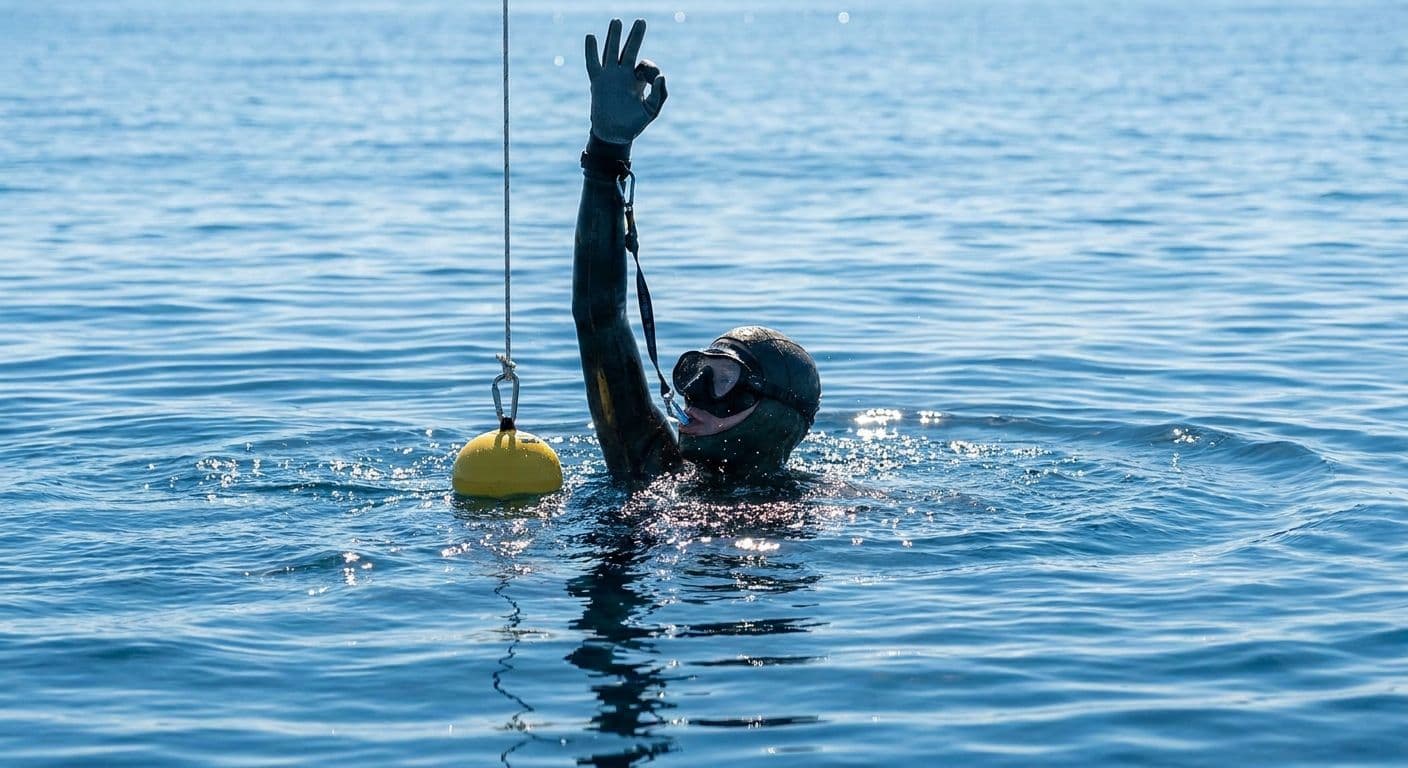
In competition, reaching a great depth or distance is only half the job. The performance counts only if the athlete completes a clean surface protocol immediately after coming up. This rule sits at the heart of how freediving is scored, and it exists primarily to keep divers safe.
What the protocol looks like
Once the airway is clear of the water, the athlete must, within a short fixed time window, perform a defined sequence. Typically this involves:
- Removing any facial equipment such as a noseclip or mask.
- Giving a clear hand signal to the judge.
- Saying a short, defined verbal confirmation such as an "I am okay" phrase.
The steps must be done in order, without major delay, and the athlete must keep their airway above the water throughout. The exact wording, gestures, and time limit are set by the current rules, so confirm the latest version before competing.
The three cards
- White card: a clean performance that meets all the rules; full points awarded.
- Yellow card: the dive counts but with a penalty for a fault such as a small protocol slip or touching the line incorrectly.
- Red card: the performance is disqualified, for example after a blackout or loss of motor control at the surface.
Why such a strict ritual?
The protocol is a quick, standardized way to confirm an athlete is fully conscious and coordinated. A diver who cannot complete simple steps may be impaired, so the rule doubles as an early-warning safety check.
Blackout and LMC are medical events
A red card for blackout or loss of motor control is not just a lost score. Safety divers must immediately support the athlete's airway and begin recovery procedures. These events demand trained supervision every single time.
Practicing the surface protocol until it is automatic pays off twice: it protects your scores and reinforces the habit of finishing every dive in clear control. Next, we zoom out to see how a full competition day is organized.