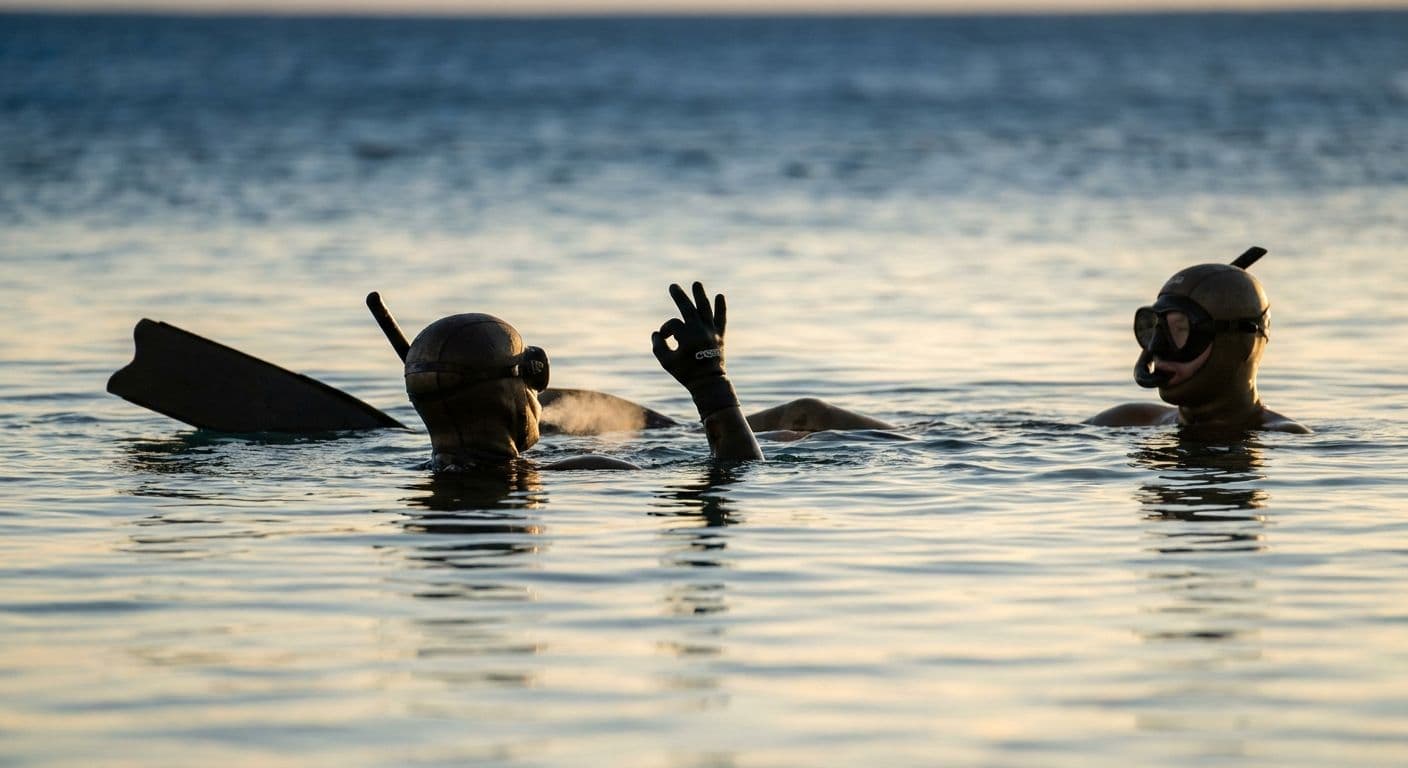
The surface protocol is the short, deliberate routine you perform the instant your head clears the water. It does two jobs at once: it refills your oxygen quickly and it demonstrates to your buddy that you are conscious and in control. A clean protocol is the signature of a disciplined freediver.
Recovery breathing first
Recovery breaths are sometimes called hook breaths. The idea is to take a brisk inhale, hold it briefly with a slight effort that helps push oxygen into the blood, then release passively and repeat. A few of these in the first seconds after surfacing rapidly restore the oxygen your brain needs and steady you against a post-dive blackout.
Breathe before you do anything else
Take your recovery breaths before reaching for your nose clip, mask, or anything else. Oxygen comes first; gear can wait a few seconds.
The breathe-signal-say sequence
A widely taught surface protocol follows a fixed order so your buddy can read it instantly:
- Take your recovery breaths immediately on surfacing.
- Remove your mask or nose clip so your face is visible.
- Give a clear hand signal — the okay sign — directly to your buddy.
- Say the words clearly, for example "I'm okay," making eye contact.
Hold the signal steady
A rushed or shaky okay sign tells your buddy something is wrong. If you cannot complete the protocol cleanly, you may be experiencing an LMC — your buddy should stay on you and be ready to assist.
Practice the protocol on every single dive, even shallow easy ones, until it becomes automatic. Consistency means that on the rare day something goes wrong, a broken protocol stands out immediately to your buddy.
This is an overview for education only. Learn and rehearse the surface protocol in person with a qualified instructor so it becomes second nature in real conditions.
Why the order matters
Each step exists for a reason. Breathing first restores oxygen when you need it most. Removing the mask lets your buddy read your eyes and face, which reveal far more than a hand signal alone. The hand signal and the spoken words then give two independent confirmations that your brain is working normally — a diver mid-blackout cannot do both cleanly. Skipping or reordering steps strips out these checks.
Keep one hand on the line or float through the whole protocol so that if you do falter, you stay supported at the surface rather than slipping under. Only once the protocol is complete and your buddy has acknowledged you should you relax and let the moment settle.