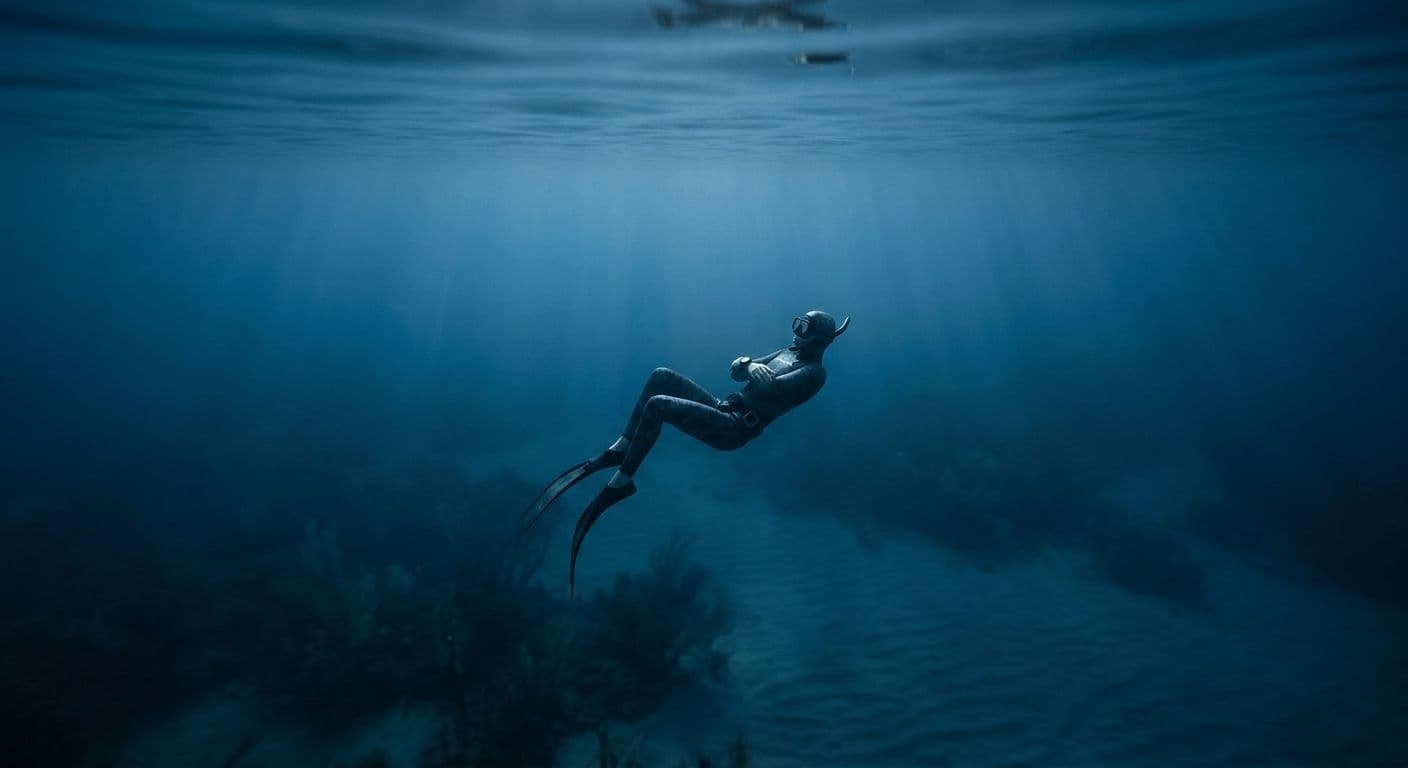
In freediving, your mind matters as much as your lungs. A tense, anxious diver burns oxygen quickly and feels the urge to breathe sooner. A relaxed diver stays comfortable far longer. Learning to settle yourself is not a luxury in this sport; it is a core skill.
Releasing Physical Tension
We hold tension without realizing it, often in the jaw, shoulders, and hands. A body scan helps you find and release it. Slowly move your attention from your feet to your head, softening each area you pass. By the time you reach the top, your whole body should feel heavier and looser.
Quieting The Mind
Racing thoughts feed anxiety, which feeds oxygen use. A few techniques help bring the mind back to calm:
- Anchor your attention on the slow rhythm of your breath.
- Picture a peaceful scene that feels safe and still to you.
- Let thoughts drift past without grabbing onto them.
Preparing Before A Dive
Many freedivers rehearse a dive in their mind before doing it. They imagine each phase unfolding smoothly and calmly. This mental practice builds familiarity and reduces fear, so the real dive feels like something you have already done.
Find your own calm
Relaxation is personal. Some people prefer silence, others a favorite memory or a slow count. Experiment until you find what genuinely settles you.
Leave your ego at the surface
Mental preparation should keep you calm, never push you to chase numbers. Stop any dive the moment it stops feeling comfortable, and never compete against others in the water.
A peaceful mind is something you train, just like a muscle. The calmer you become, the more the water opens up to you.