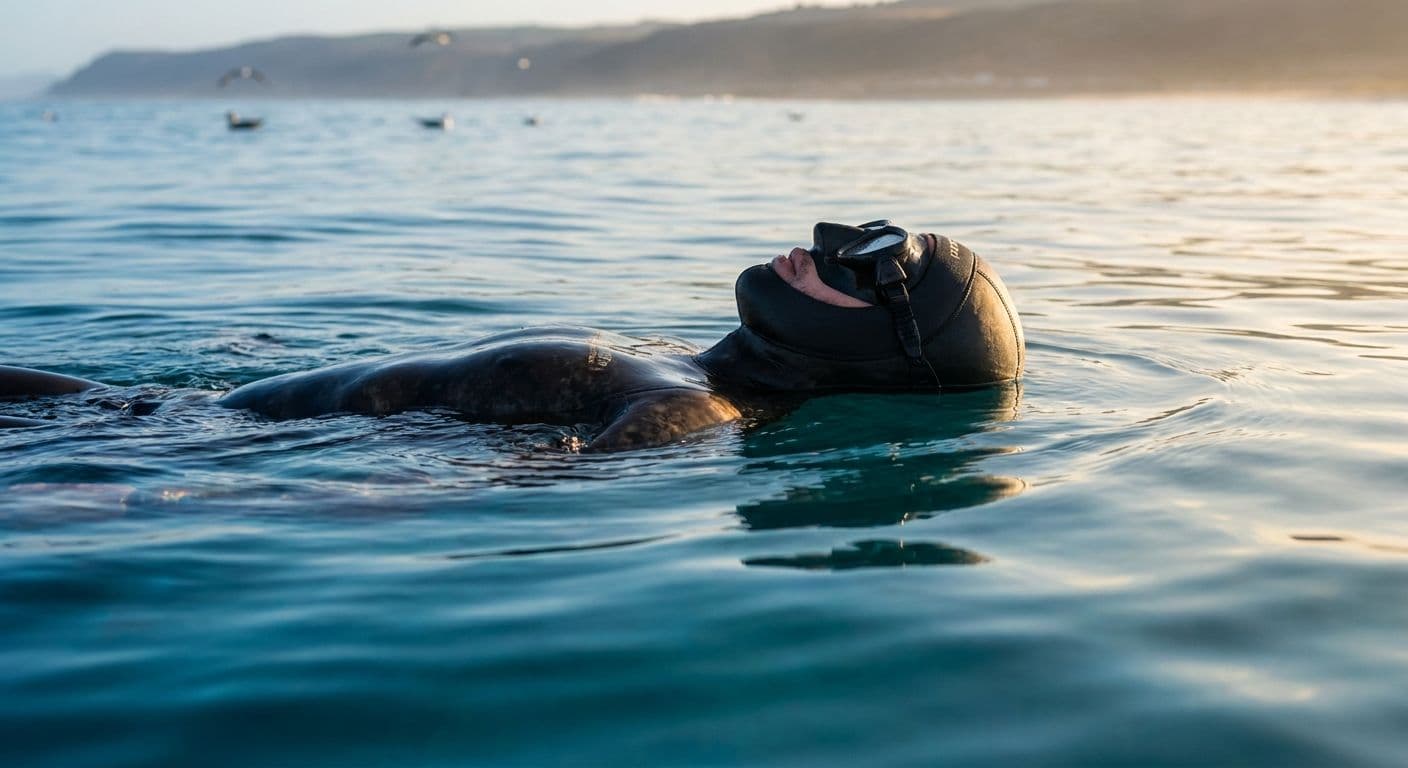
Before you ever hold your breath, it helps to learn how to breathe properly. Most of us breathe shallowly into the chest all day without noticing. Freediving asks for something deeper and slower, led by the diaphragm, the dome-shaped muscle that sits just below your lungs.
Belly Versus Chest
When the diaphragm contracts and drops, your belly gently rises and air flows into the lower lungs. This is a fuller, more efficient breath than lifting the shoulders and chest. To feel the difference, place one hand on your belly and one on your chest. Aim to make the lower hand move first and most.
A Simple Practice
- Sit or lie down somewhere quiet and comfortable.
- Inhale slowly through the nose, letting the belly expand first, then the ribs.
- Exhale even more slowly through the mouth, feeling your body soften.
- Keep the breath smooth and quiet, with no straining at the top or bottom.
Why Slow Exhales Matter
A long, gentle exhale nudges your nervous system toward rest and calm. Lengthening the out-breath slightly more than the in-breath is one of the simplest ways to lower your heart rate and settle your mind before a breath-hold.
Calm breathing is not a trick you perform once; it is a habit you build over many quiet minutes.
Do not hyperventilate
Fast, forceful breathing before a hold can lower your urge to breathe and raise the risk of blackout without warning. Breathe slowly and gently instead.
Practice on land first
Build your breathing skills on dry land where it is safe. Only bring them to the water once they feel natural and you have a buddy present.
Good breathing is a skill you carry into every dive and every quiet moment of your day. Treat it as the bedrock everything else is built upon.