Competitive freediving is not a single contest but a family of disciplines, each testing a different facet of breath-hold diving. They fall into two broad groups: pool disciplines, held in a swimming pool, and depth disciplines, held in open water along a vertical line.
Pool disciplines
Pool events are popular because they are easier to organize and supervise. The main ones are:
- Static apnea: floating face-down and holding the breath for as long as possible. It is pure relaxation and mental control.
- Dynamic with fins: swimming the greatest horizontal distance on one breath, usually with a monofin or bifins.
- Dynamic without fins: the same distance challenge, propelled only by your own arms and legs, which is technically demanding.
Depth disciplines
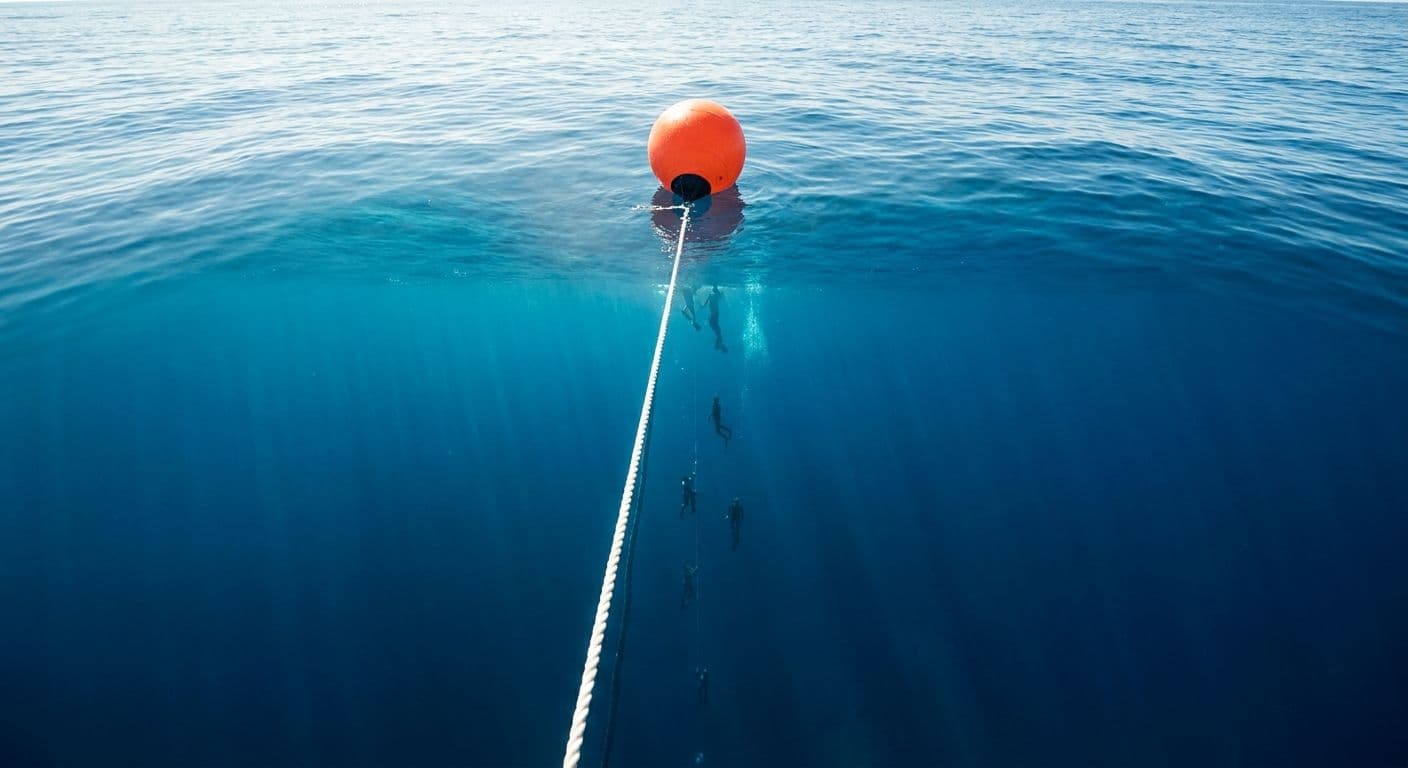
Depth events take place in the sea or a deep freshwater site along a weighted line. The way you travel determines the discipline:
- Constant weight: you descend and ascend using fins, keeping your weights with you the whole time.
- Constant weight without fins: the same, but propelled only by your body, widely seen as the purest depth event.
- Free immersion: no fins at all; you pull yourself down and back up the line with your arms.
A further depth event, variable weight, uses a weighted sled to descend, though it appears mostly in record attempts rather than standard meets.
Why so many events?
Each discipline isolates a different skill set, from raw relaxation in static to propulsion efficiency in dynamic and equalization mastery at depth. Most athletes specialize, but training across them builds well-rounded ability.
Match the discipline to your training
Depth events carry different risks than pool events, including pressure-related injury and a longer rescue path. Build into any new discipline gradually under qualified supervision.
Knowing the disciplines helps you understand competition results and choose what to focus on yourself. Next we look at the surface protocol, the moment every dive is ultimately judged.