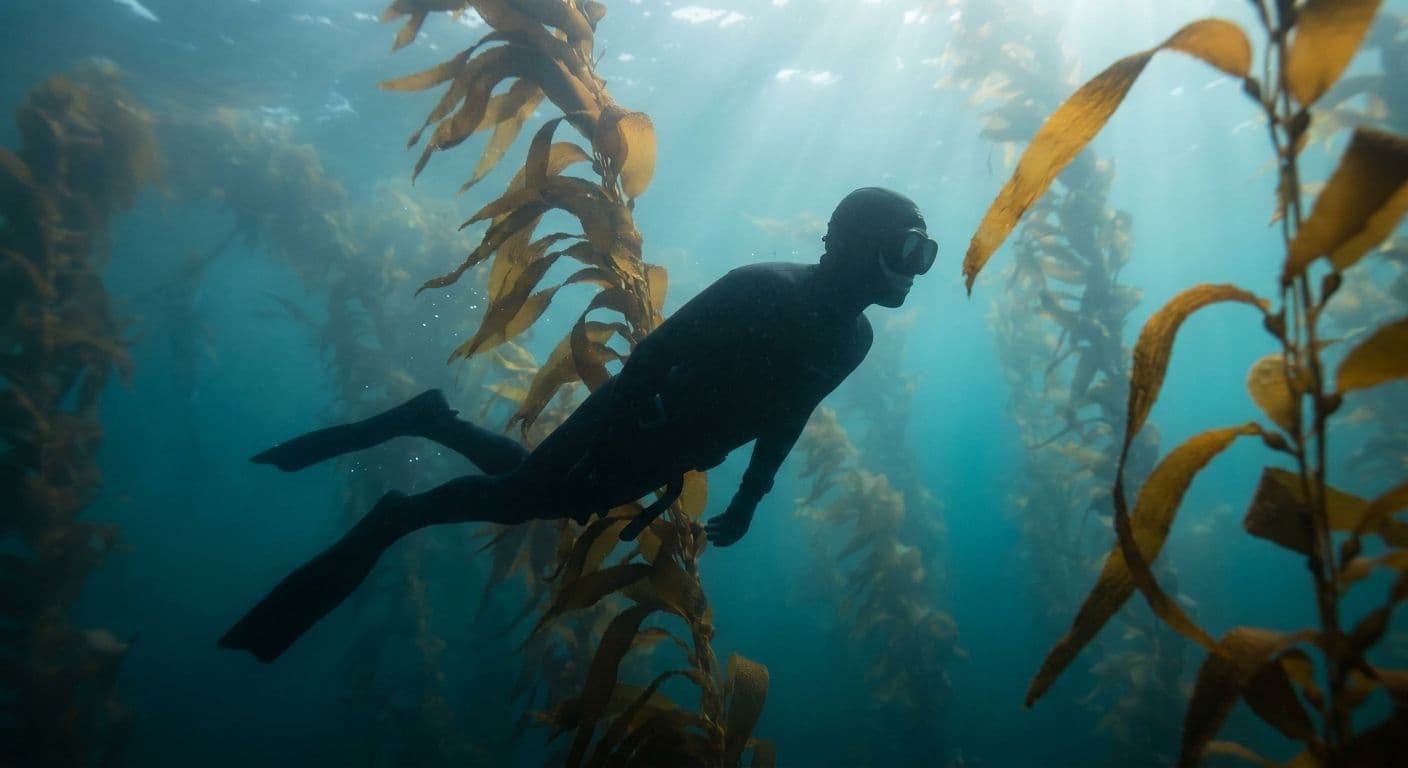
Open water gives freediving its magic, but it also introduces hazards a controlled pool never has. Cold, current, traffic, and shifting weather can all turn a relaxed session into an emergency. Reading the environment honestly — before you enter — is a core safety skill.
Cold
Water pulls heat from the body far faster than air. As you cool, you lose energy, dexterity, and clear thinking — all of which you need for safe diving. Cold can also make equalization harder and contributes to depth-related risks. Wear adequate thermal protection, end the session before you are shivering, and treat creeping cold as a reason to get out, not push on.
Cold erodes judgment quietly
By the time you feel seriously cold, your decision-making is already impaired. Build a generous margin and exit early rather than waiting for obvious warning signs.
Currents
A current can quietly carry you away from your boat, your buddy, or your exit point while you focus on a dive. Fighting a strong current is exhausting and can leave you depleted. Assess current direction and strength before entering, plan to swim into it first so the return is easier, and use a line or float to stay anchored to a fixed reference.
- Use a surface buoy with a line so you and your buddy share a fixed point.
- Know where your exit is and how the current affects reaching it.
- If you tire, rest on the float rather than fighting the water.
Boats, visibility, and changing conditions
Boat traffic is one of the most serious threats to surfacing freedivers, who are low and hard to see. Always display a recognized dive flag, dive near a visible float, and surface with awareness of traffic above. Watch the weather too — wind, swell, and incoming fronts can change a safe site into a hazardous one in minutes.
Stay visible to boats
A diver at the surface can be invisible to a moving boat until it is too late. Use a bright float and dive flag, keep your group together, and never assume a vessel has seen you.
Before any open-water session, run a quick assessment: conditions, entry and exit, current, traffic, and your team's experience for that site. Dive within the easiest of those limits, and learn local conditions from experienced divers. This article is general education, not site-specific or a substitute for proper instruction.
Marine life and entanglement
Most marine life poses little threat to a calm, respectful diver, but a few hazards deserve attention. Fishing line, nets, kelp, and ropes can entangle a freediver, which is especially dangerous on a breath-hold. Carry a small cutting tool when diving near such hazards, move deliberately, and never push into a tight or snag-prone space alone.
Learn which local species and conditions warrant caution from divers who know the site. Respect the environment, keep your distance from animals, and remember that calm behavior keeps both you and the marine life safe.