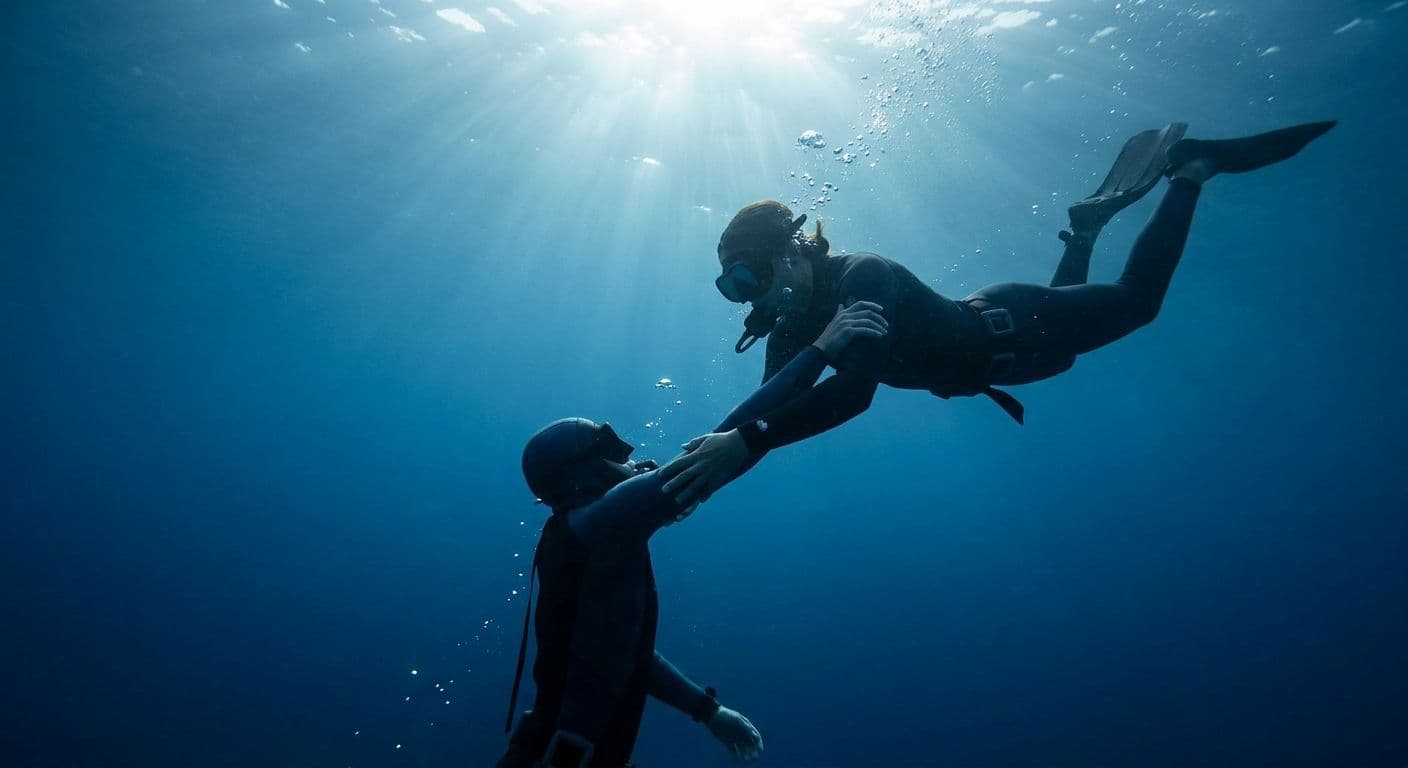
Good buddying is the practical backbone of freediving safety. A skilled buddy prevents most emergencies through attention and good positioning, and resolves the rest with calm, practiced action. This article outlines the principles; the actual skills must be learned in the water with a qualified instructor.
The supervision routine
The standard system is one diver down, one buddy watching. The buddy gives full attention to the single diver in the water — no scrolling, no side conversations, no watching two people at once. As the diver returns, the buddy meets them in the shallows and accompanies them for the riskiest stretch near the surface.
- Agree on signals and a maximum dive time before anyone goes down.
- Descend to meet the diver during the final part of the ascent in open water.
- Watch closely for at least 30 seconds after surfacing — blackout can strike just after the first breaths.
Why 30 seconds
The most dangerous moment is often right after surfacing, before oxygen fully replenishes the brain. A diver who looks fine can still black out in the seconds that follow, so confirmation matters.
The basic rescue sequence
If a diver loses consciousness, the goals are simple in priority order: protect the airway, get them to the surface, and stimulate breathing.
- Bring them to the surface without delay, keeping their mouth and nose protected from water.
- Remove their mask and any mouthpiece, support their head, and keep the airway clear above the waterline.
- Speak to them, tap the cheek, and gently blow across the face to prompt breathing.
- If they do not begin breathing quickly, move toward rescue breaths and call for emergency help following your trained protocol.
Training cannot be skipped
Reading these steps is not enough to perform them under stress. Rescue skills must be practiced repeatedly with a certified instructor until they are automatic. Lives depend on rehearsed, confident action.
A good buddy is calm, attentive, and prepared. Build these habits on every dive, and take a recognized course to turn this knowledge into real, tested ability.
Set the team up before anyone dives
Strong buddying starts on land. Before the first dive, agree on hand signals, a maximum time or depth for the session, who supervises first, and what you will do if something goes wrong. Confirm that your float, line, and any oxygen or first-aid kit are in place and reachable. A few minutes of planning removes the hesitation that costs time in an emergency.
Equally important is honesty about fitness for the day. If either of you is tired, cold, anxious, or unwell, say so and adjust. A buddy who hides that they are struggling makes the whole team less safe. Diving conservatively together beats one person quietly pushing limits the other cannot cover.