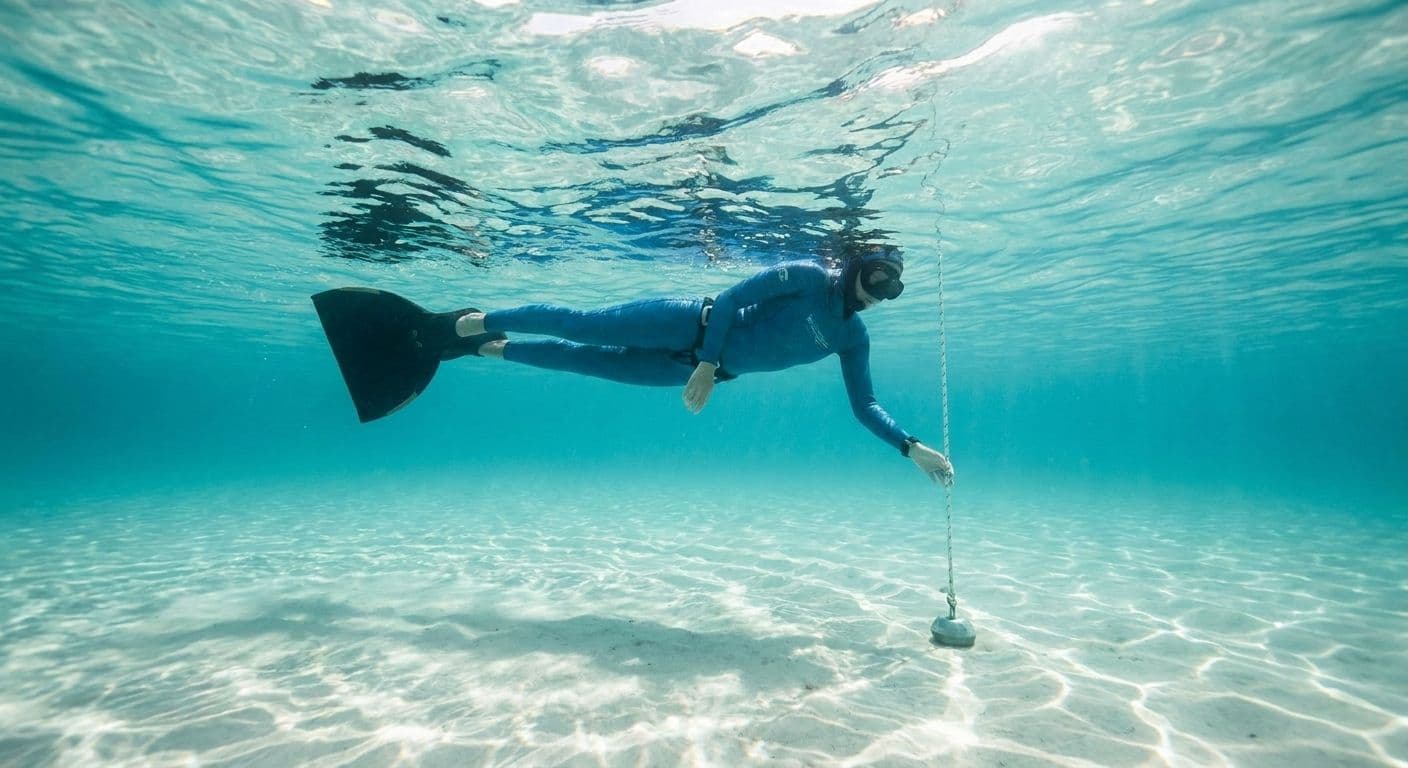
The first rung on the recreational ladder is designed to be welcoming. It assumes you have never trained breath-hold diving before and that your main goal is to find out whether the sport suits you. The atmosphere is intentionally relaxed: there is no pressure to chase a number, only to get comfortable in the water.
What a first course usually covers
An entry course blends a little theory with plenty of in-water time. You can typically expect to touch on:
- Calm, diaphragmatic breathing and how to relax before a hold.
- A first static breath-hold while floating face-down with support nearby.
- A gentle descent to a shallow depth, often along a guide line.
- The basics of looking after a partner, because freediving is always a two-person activity.
How deep and how long?
Targets at this level are deliberately gentle. Depth is usually limited to the shallow end of open water or a deep pool, and breath-hold goals are short and very achievable for most healthy adults. The emphasis is on comfort and good habits rather than maximum performance, so do not worry if your numbers feel small. Because exact figures differ between editions and regions, ask your instructor for the current targets.
Relax first, perform later
Your biggest gains early on come from relaxation, not lung capacity. If you can lower your heart rate and let tension melt away, longer holds tend to follow naturally.
Who it is for
This level fits complete beginners, snorkelers who want structure, and anyone testing the waters before committing to a full certification. Reasonable swimming ability and general health are normally expected, and you may be asked to complete a medical questionnaire.
Never hold your breath alone
Even at shallow depths, practicing breath-holds without a trained buddy watching can be fatal. Always have a partner ready to act, and never train breath-hold in water by yourself.
Leaving a first course, most people feel calmer in the water and curious to learn more. If that sounds like you, the next level builds directly on these foundations.